Key Takeaways:
- The Direction of the Water Matters: The exact source of the water determines how insurance companies handle your claim.
- Ground-Up Water Equals a Flood: If water comes from the ground up, such as a coastal storm surge, heavy rain pooling, or overflowing canals, it requires a separate flood insurance policy.
- Top-Down or Inside-Out Water Damage: If water comes from the top down or inside out, like a wind-damaged leaky roof or a burst pipe, your standard homeowners insurance usually applies.
___________________________________________________________________________________________________________________________________________________________
Living on the Florida coast means dealing with water. When water gets into your home, knowing how your insurance policy responds is key. Understanding the difference between flood insurance vs. internal water damage insurance can save you from a massive financial loss.
Many homeowners assume their everyday home insurance policy protects them from every type of wet mess. That mistake can cost you your savings. Let us look at how these policies work so you can correctly protect your property.
Weather Related Water Damage: Top-Down vs. Ground-Up Water Damage
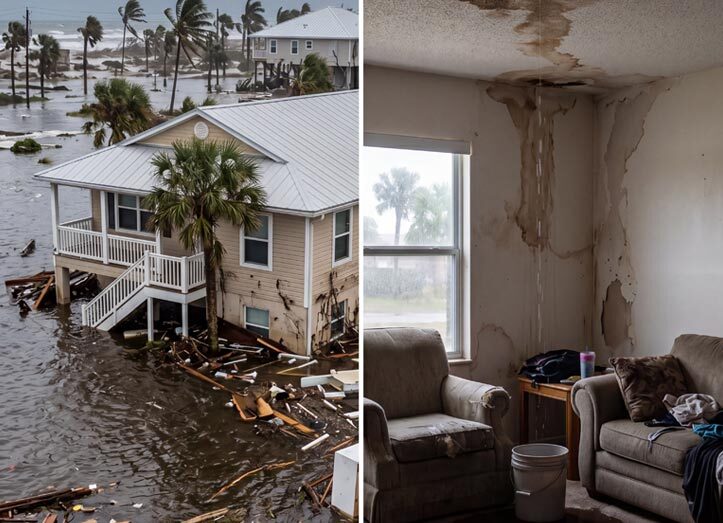
If your home is damaged by water during a storm, insurance companies look at where the water originated to determine how to handle insurance claims. Did it enter the home from the ground up or from the roof/wall down?
If the water damage comes from the ground up, and no other opening has been created in the home, then it is most likely a flood damage issue. You will need an active flood policy to repair the damage.
This would include heavy rains that pool in your yard, rising waters from the Punta Gorda canals, or a storm surge from Tampa Bay that flows into your living room.
Conversely, if a severe storm hits the Pinellas County coast and rips shingles off your roof, rain will likely pour into your attic. In this specific scenario, your home insurance cover kicks in. The wind caused the structural opening first, and the rain followed.
High winds can peel back roofing materials or break a window. When rain enters through these fresh openings, it is categorized as storm-related water damage. Your policy will help fix the roof and the stained ceilings.
The key here is that the water never touched the ground before entering your home.
Why Coastal Areas Like Dunedin and Punta Gorda Need Separate Flood Policies
If you live near low-lying areas like the Dunedin Marina, the Honeymoon Island causeway, or the Peace River, relying only on home insurance is a dangerous gamble. Water does not care about lines on a map. Even if you are not technically in a high-risk flood zone, rising water can still happen to you.
When a flood insurance claim is submitted, the claims adjuster looks for evidence that water covered two or more acres of normally dry land or affected at least two properties. If the water came from the Charlotte Harbor coastal surge, it meets this definition perfectly.
You need a dedicated policy to protect your structure and your belongings. Flood policies provide contents coverage for your furniture, clothes, and electronics, which home insurance will ignore during a rising water event. If you have to file a flood insurance claim, having a separate policy is the only way to get reimbursed.
Local water hazards can overflow quickly during regular summer storms, not just major hurricanes. Investing in flood insurance in Dunedin, FL. or Punta Gorda protects your hard-earned equity from these coastal realities.
Don’t Wait for a Hurricane: The NFIP 30-Day Waiting Period
Waiting until a tropical storm enters the Gulf of Mexico is a recipe for disaster. The National Flood Insurance Program enforces a strict rule that surprises many people. There is a mandatory NFIP 30-day waiting period Florida homeowners must sit through before a new policy becomes active.
If you try to buy coverage while watching the weather channel, your policy will not activate in time to protect your home from that specific storm. Private insurance companies sometimes offer shorter waiting periods, but their availability varies. To avoid getting stuck in a high-risk flood scenario without protection, you must secure your policy during quiet weather.
Take the time to learn more about flood options now so you are not left unprotected when the skies turn gray.
When Internal Plumbing Fails
Internal plumbing issues are another common reason to file a claim. If your washing machine hose snaps while you are at work, or your hot water heater cracks, the resulting mess is covered. Think about your refrigerator water line, a leaking dishwasher, or a toilet overflow. The coverage focuses on sudden and accidental water discharge inside the house.
Your home insurance service helps pay to dry out the drywall and replace ruined flooring.
But beware, there are many policy exclusions when it comes to water damage, so make sure you review your policy carefully. The plumber’s or leak detection bill may be excluded or the policy may contain Limited Water Damage limits that limits the amount of damages the policy will reimburse you.
Do I need to add Water Back to my policy?
Water back up is an optional coverage that pays for water damage that backups from a pipe or appliance. If your dishwasher pushes dirty water out of the discharge pipes but a clog further down the line prevents it from a final exit, this coverage would help.
If you share water and sewer lines, like in a condo or townhome, having this coverage on your policy is essential. Also, if your downstairs neighbor has a plumbing failure it cause stop up your plumbing lines too. The stoppage could cause toilet water to back up and spill on to your new bathroom floor when you try to flush. Water Back Up is an affordable coverage that all policies should include.
Frequently Asked Questions About Florida Insurance Claims
Is storm surge considered flood or water damage in Florida?
Storm surge is always classified as a flood. Standard homeowners policies do not cover storm surge damage. You must have a separate flood policy to cover losses from tidal water or storm surge driven by coastal winds.
Does homeowners insurance cover water damage in Florida if my pipe bursts?
Yes, most homeowners insurance does cover water damage in Florida when it comes to internal plumbing failures. If a pipe bursts suddenly, your standard policy normally covers the clean-up of the water and repair to any damaged property. However, it usually does not pay to fix the specific pipe or water heater that broke.
Can I buy flood insurance right before a hurricane hits?
YES, but it won’t pay for damages of the pending hurricane. The national flood insurance program requires a 30-day waiting period before coverage takes effect. Private insurers might have shorter windows, but they typically stop writing new policies the moment a storm tracking window opens for the state.
What is the difference between building coverage and contents coverage in a flood policy?
Building coverage protects the physical structure of your home, like the walls, floors, and built-in cabinetry. Contents coverage protects your personal items inside the home, such as clothes, furniture, and television sets. It is best to have both to protect your entire household.
What counts as a high-risk flood zone in coastal Florida?
High-risk zones are areas where there is a one percent or greater chance of flooding in any given year. These are typically marked as Special Flood Hazard Areas on FEMA maps. However, history shows that low-risk zones experience significant flooding too, especially near coastal rivers and inlets.
Protecting your Florida home requires local knowledge and the right coverage mix. Do not wait for rising waters to find out if you have the right protection.
Graddy Insurance Group is Local, Reliable, and Always Here for You. Our team understands the specific coastal risks facing our neighbors, from the canals to the bays.